
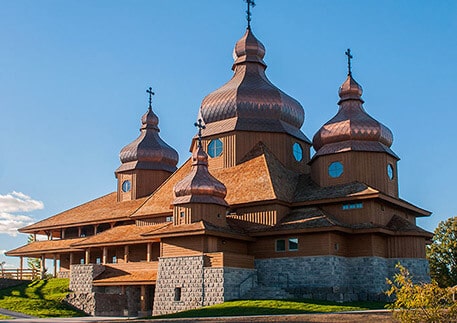
 For many years, Royal York Roofing has been providing commercial and residential properties across the GTA with beautiful cedar roofs. From new construction to roof replacements, we take pride in our ability to craft quality cedar roofs that stand the test of time and stand up to the elements. Rain, snow, heat, or wind – our cedar roofs maintain their beauty through all Canadian seasons.
Cedar roofing is, as its name suggest, made of wood. Cedar is one of the best performing materials when it comes to crafting shingles and shakes, and can offer protection against the elements. Royal York Roofing uses the hand-nailing technique for cedar roof application to ensure that each piece of wood rests in place properly without fail.
With Royal York Roofing, you are getting reliable service in a timely manner. We understand that roof work can be a nuisance and we don’t want to disturb you or your neighbours for longer than necessary. Even though each piece of wood is hand-nailed, we work effectively and efficiently to get the job done swiftly.
Cedar shingles and shakes act as an extra layer of installation for your home. Natural wood roofing – even though it is treated – can greatly reduce your heating and cooling costs because cedar prevents heat from escaping through the roof in the winter months. The wood fibres of a cedar roof also keep cool air in during the summer, keeping your home at the perfect temperature inside even when the sun is scorching outside.
When it is first installed, cedar roofing appears light reddish-brown. As time passes, the colour changes to a soft gray before finally settling on a muted silver tone. No matter what colour stage your cedar roof is in, you’ll know you have a roof over your head that lasts. In fact, cedar roofing can last up to 50 years if maintained. However if you do find that your aged roof is in need of repair, you need not worry- we also offer roof maintenance and repairs.
When you have a cedar roof installed by Royal York Roofing, you are getting more than a roof; you are getting an investment. Cedar roofing is long-lasting and provides your home with added value. Although cedar roofing is vulnerable to fire exposure, this is not a concern for homeowners within Toronto and its surrounding area. Unless you are sitting on your cedar roof while roasting marshmallows over an open flame, you do not have to worry about fire damage.
To request a free estimate contact Royal York Roofing at 416-760-7663. Let us give your home the gorgeous cedar roof it deserves.
Limited ventilation is one of the most common problems associated with modern roofing systems. Without high levels of roof ventilation, you’ll be unable to achieve full airflow throughout your home. Read More
“Hi I am Christie MacInnes at 42 Wilgar Rd, and I needed a new roof. A friend did it about 10-15 years ago, and he said I needed a new roof. The shingles were coming off, so I started the process of looking for people, and I got Royal York Roofing’s name from a friend at swimming and I called for an estimate. They came the next day, right on time, the minute they said they would be here. Bruce walked me through the whole process.”